Course architecture
Define learner profiles, measurable outcomes, prerequisites, module sequence, practice activities and evidence requirements.
Output: course blueprint and lesson-page structure
Skunkworks Academy · Instructional technology
Plan clear learning outcomes, create visual module-by-module lessons, align assessments and prepare courses for a consistent Academy release.
Private plugin · Sign in to ChatGPT · Access is limited to authorised users
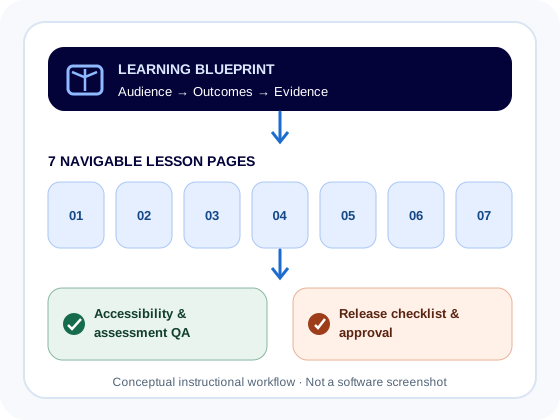
One learning blueprint. A repeatable publishing process.
From brief to build-ready curriculum
Reusable guidance and templates keep instructional quality consistent, without recreating the rules for every course request.
Define learner profiles, measurable outcomes, prerequisites, module sequence, practice activities and evidence requirements.
Output: course blueprint and lesson-page structure
Specify annotated screenshots, process diagrams, instructional illustrations, alt text and responsive visuals that explain rather than decorate.
Output: visual asset specifications and media QA
Map outcomes to labs, feedback and assessor rubrics. Review accessibility and document applicable education-quality requirements.
Output: assessment matrix and evidence gaps
Check Academy headers, footers, themes, contrast, enrolment links, canonical URLs, navigation, sitemaps and GitHub release gates.
Output: publication checklist and release decisions
Repeatable by design
Each stage produces an inspectable deliverable. A course only reaches the site after authorised publishing and successful verification.
The plugin provides guidance and reusable instructions. It does not independently edit GitHub repositories, merge pull requests, grant enrolments or deploy a production website. Those operations require separately connected and authorised tools.
Designed for reviewability
Build an auditable evidence trail for learning design and the finished website.
Try it with a course brief
Start with a concrete audience, a delivery target and an agreed quality bar. The plugin can prepare the reusable design artifacts before any authorised release actions.
Design a Skunkworks Academy course on GitHub Pages deployment, DNS and HTTPS for junior cloud engineers. Make each module a separate navigable page with measurable outcomes, labelled technical visuals, hands-on labs, assessment rubrics and links to official documentation. Reuse the Academy global shell and design tokens, then prepare a WCAG 2.2 AA, enrolment, sitemap and CI release checklist. Do not claim ISO certification without verified evidence.
You can edit this brief after copying it into ChatGPT.
Before you begin
Not currently. This is a private plugin in its owner's ChatGPT account. The plugin link may require signing in and an authorised connection; a public web landing page does not grant plugin access.
No. It supplies instructional-design skills, blueprints, review criteria and release guidance. Publishing, GitHub edits and LMS operations depend on separately connected tools, permissions and passing checks.
No. It helps identify relevant quality requirements, map learning evidence and document gaps. Formal conformity claims require an appropriate independent, documented assessment.
In an authenticated LMS or approved protected document service with access control, audit logs and retention policies. Do not embed sensitive records or private answer keys in public static pages.
Ready to plan your next course?
Open the plugin if you have access, explore existing Academy learning, or contact the team to discuss a custom course programme.